What is Victory?

How to define victory in the struggle for independence is very difficult at the best of times. I get asked directly and see online comments such as, “There’s no point in trying for separation since it will never happen.”

Never?

Any ardent separatist understands that it really is a matter of the conditions being just so, and the possibility is that may not happen in the near future until those conditions are met. But we have to look at other examples for inspiration and there is one very close to us…Quebec.

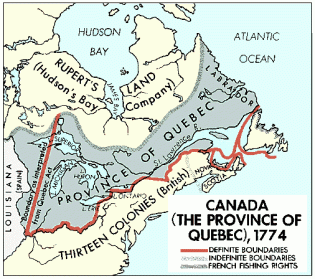
Every Westerner complains that Quebec enjoys favoured status in Confederation without understanding exactly why that is. The Federal government has always dealt with Quebec from a position of fear. Even as far back as the American Revolution, the British Government granted “les Habitant” special rights and entrenched their language in British North America if they would not side with the Americans in the American Revolution. Quebec separatists changed the name of Dorchester Blvd in Montreal to Rene Levesque Boulevard thinking they were striking a blow to the English. province_of_quebec_1774But they did so wrongly for it was Sir Guy Carleton, First Baron Dorchester, who saved French Canada from assimilation by the United States. Quebecers would today speak a version of French more like the Cajuns in Louisiana than the French we hear today.
So the trend goes very far back. Agitations by Quebec separatists in recent times have netted gains that mark it far above the rest of Canada. If Justin Trudeau considers Quebecers above other Canadians, he has a point. Where else in Canada can a province create legislation that effectively makes a population sub-group second class citizens and imposes fines and possible jail terms for displaying a sign in anything other than French? It’s as if Canadian law stops at the Quebec border.

All of this has been won by being the perpetual squeaky wheel. Consider what might be gained if Ottawa seriously considered Western independence a very real possibility? What concessions would be made? How would things change?

The elites that govern us in Ottawa know full well that if they regularly give out tokens of their “appreciation” for the West, Westerners will blindly follow and smile as the riches of our lands are controlled by eastern elites for the benefit of everyone but us. It’s the old shell game. The trickster lets you win once so there is hope you’ll win again. But we all know how that works. If a referendum on independence were held in the West and we lost by .5% what would be the outcome?

There are different ways to win. And only by looking at the long term can we expect to gain the level of autonomy we all desire.

Happy woman standing on long road at sunsetKeep up the fight, never surrender…ever!

Enough is enough.

Once upon a time, there was a fellow who, tired of watching the West get steamrollered by the liberal east, decided to support the idea of an independent West. A place where families raised their kids with little interference by big government, where the West could make its own decisions without having the approval of eastern elites and a media that sees Westerners as troublesome hicks unworthy of any serious consideration. A place where rule of law could be of benefit to all and where all participated equally in the direction of the country.

So, how to start?

Well, this fellow looked around and noticed that social media was the place to be insofar as popularizing and promoting independence, so he created a page on Facebook modelled on a group in Alberta. It soared to over one thousand members and really opened discussion on what we could do. Then he gave up control of his page to a bigger organization, becoming a moderator.

All this seemed to be going well! The fellow made contacts with other like minded people and even had meetings to discuss how to get started with a formal political party. He created a blog, much like this one, which would give him an opportunity to air his thoughts and get the feedback he’d need to refine things.

However, some dark forces began to move in. The fellow had to repeatedly remind people that the movement was to work towards independence, not to air views on the immigration of particular people and views that could be used against us. The page was also becoming more negative all the time, with focus on why we couldn’t and not on how we can.

So he left the group.

I suppose you know already that I am the “fellow” in the story. The movement is at risk. The cause is attracting the type of people that dwell on anti-Islam and hard right or hard left ideas instead of organizing and promoting. When the leadership asks for help they are reduced to pleading. The 10-90 rule is applying to the movement, 10 percent (or less) of the people are actually serious, with 90 percent enjoying the ride.

This is a mystery to me and is very much a topic for a future blog entry. There is no fire. Why? A foreign leader said a naughty word over ten years ago and everyone loses their minds, thousands march in Vancouver. Yet we cannot do anything in our province without kowtowing to a government 3000 miles away, who treats us like children and everyone’s ok with that? People have legitimate fears over unbridled and largely unvetted Islamic immigration and are unwilling to involve themselves in doing anything about it other than post a nasty meme on Facebook.  Maybe the naysayers are right, we’ve failed before we started.

Time to think things over. The first question; is this real?

Feelings…

On my blog I try to stay as factual as possible, tossing in some history to serve as the context for what might otherwise be not much better than dry toast.

So in this instalment, let’s get a bit more visceral. Let’s talk about what one feels when one looks at independence from Canada.

First, the usual canard that we are miffed and whine about separation because we lost Stephen Harper and the Conservatives.

This is tossed about as validation from the east as to why Westerners are upset. “Oh, they just PO’d because they lost the election.”

Let me tell you something that may come as a shock. Harper and the Conservatives were liberals. In fact, the Conservatives have doubled down at being liberals. One just has to take five minutes to look at the positions of the Conservative Leadership hopefuls and the Ontario PC leadership’s policies to see where we’re at. The status quo is strong and healthy, Canada will continue to go in one direction and one direction only, the difference between left and right in Canada is not much more than the speed at which we go into decline.

Harper was elected in 2006 only as a result of the Sponsorship Scandal. That’s it, voila! And from the moment he took power to his defeat in 2015, the Canadian left, through the media and arguably society as a whole, applied pressure to make sure he headed in the desired direction. In short, his was a caretaker government until the Liberals could be brought back to power. If a scandal wasn’t brewing, the media created one. It was incessant. The next generation of Conservatives know that to be electable they must be Liberals. So what does this mean to secessionists? It means that the status quo cannot and will not be changed…ever.

“The West wants in” never had a chance. It was simply an illusion. And then, the second instalment of Trudeauism…

Eastern Canada has given him a huge majority and he is still popular with high media support despite having wasted 30 billion, lying to Canadians, helping to bring Canada into the Caliphate and now taking steps to make “Islamophobia” a prosecutable offence. This can only mean one thing, Eastern Canada actually WANTS this. His reaction to Alberta fires and Western unemployment, his lukewarm support for pipelines, his commitments to foreign countries and the UN speaks volumes of a man who knows what side his bread is buttered and it isn’t the western side.

So fine, have at it. But the West has had enough; we’ve been milked by eastern Canada and the Laurentian Elites for over 100 years. Now they tax us without fair representation and go out of their way to kill our resource industries in an effort to make Saudis and Americans rich. Ottawa allows foreign groups to protest and sabotage our efforts with impunity.  Westerners have endured this for over a century and when we dared complain we were (and still are) treated as traitors, bumpkins void of original thought, red necks, deniers, and more visceral contempt.

cartoon-on-federal-control-of-natl-resources-na-3055-16

Nothing much has changed for the West since Laurier.

How dare you complain!! Send money and shut up! We in the east, in Ottawa, in the Liberal Party, will tell you what to think and feel and we have the votes, the seats, the media and chosen immigrants on our side so zip it West, your kind is not wanted. We’re far too sophisticated and…elite. And as a sideline, Westerners are treated to Ottawa’s largess towards Quebec. Quebec coughs and Ottawa gives them a case of Kleenex. The West burns and we’re told we could have it worse.

How does that make us feel? Do you have access to 7 dollar a day child care? What are we to think?

I’ll tell you what it makes me think. The Polite Separatist wonders why there aren’t legions clamouring to be free of the demands of Eastern Canada. It really is a no brainer. Put yourself in this situation. You are living in a big house with your whole family. You are expected to provide for everyone else, money, daycare, transportation and heating fuel, food, and much else. You receive relatively nothing in return. You can show up at family meetings but your vote is worthless in decision making and you’ll never have an opportunity to run things. Every time you comment you are told to be quiet and get to work providing.

Would you stay?

The West has been brainwashed into thinking Canada is one big happy family. But closer examination tells a very different story. We have a choice; we’ve always had a choice. We can stay in the game with the hopes that someday the east will come to think of us as equals in confederation as we have hoped for better than a century. We can break free and build a country of our own where we make the rules, we decide the future, we govern ourselves, we develop our culture and traditions, where we keep the fruits of our labours and create our own destiny for ourselves and our descendants.

There is, of course, the third choice. This is where we just shut up and live our lives content with whatever scraps we are allowed to keep and let others make our future.

So, how do you feel?

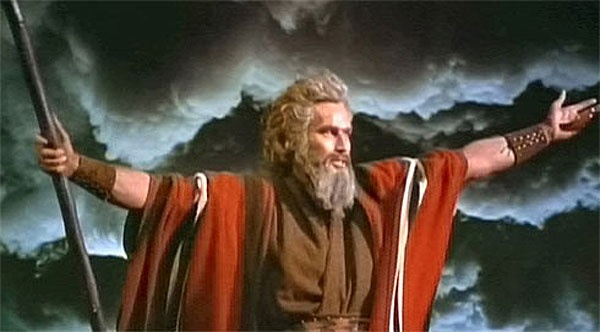
Where is our Moses?

It is New Year’s Eve as I write this and as in every last day of the year, it is a time of introspection and wonder at what lies ahead. Secession-minded people have had a good year in 2016. Our greatest allies, Justin Trudeau federally and Rachel Notley provincially, have made it nearly impossible to see a bright future for families in the West. Unemployment is rising, the deficit, both federal and provincial, is rising to levels unheard of since the last time a Trudeau was at the helm. Even in British Columbia, uncertainty looms.

We are approaching a provincial election and the overriding question is who to choose? The BC Liberals have been in power so long that it feels like BC is theirs to do with as they wish.  Christy Clark has tried to be all things to everyone in search of votes but her biggest ace in the hole is the NDP. People in BC have experienced NDP governments before that have nearly bankrupted the province and have had a taste of what the NDP stands for when Adrian Dix stated his party’s views and policies for BC. Voters flocked to the safety of the BC Liberals!

But, where to next? The BC election is slated for Tuesday, May 9, 2017. BC voters, a fickle lot if there ever was one, may just rethink their aversion to the NDP and vote them into power. Why? Because there is no choice. No options.

British Columbia is a strange place. It can be forward thinking and regressive at the same time. There are many who would accept imposing misery on their neighbours and their children to prevent any harm to trees, rocks, birds and crustaceans, even if the means to do so kills much of the wildlife they claim to love. They are mixed in with those that see our resources as a means to provide for families and build a robust economy. Where is the middle?

Any successful independence movement must be able to address the concerns of both. I would suggest an approach where use of resources is combined with intelligent delivery of these resources. Too often we see conflict because either end wants it their way or no way. Most of the time the eco front wins out because they are much better organized, funded and supported. They can get their message out in a way that demonizes any other view. We do not want to be caught in the crosshairs.

So how can we get out a message that appeals to both sides? We have the numbers, I am convinced of this. But many potential supporters are simply unaware of the independence cause and are unwilling to “come out” lest they be set upon. We need a face.

We need a leader who can present our cause in an articulate, thoughtful way. One who can negotiate the pitfalls that come when dealing with a piranha laden media. One who can be at home with a crowd or a single person. We need a Leader. If we have a Leader, the rest will come. Funding, support, media, all of it. We need a modern day Moses who can lead us to the promised land.

Where are you Moses?

Projet Liberté-Nation and La République fédérale du Québec

I have been inspired.

Being from a Quebec background, I naturally speak French. However I have lived out west for some 40 years now and although my roots are strong, I am now firmly a Westerner.

guybertrand

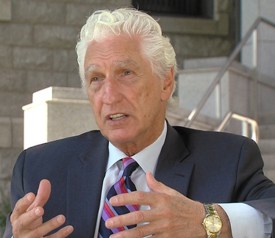
Mr. Guy Bertrand

I’ve been introduced to the “Projet Liberté-Nation”, a concept developed over 5 years by Quebec Lawyer, Mr. Guy Bertrand. In this concept, he carefully lays out his plan for the Quebec of the future, the Quebec of 2030 and beyond.

Now before you completely zone out because it’s a post about Quebec, let me give you some points to consider. First, the Independence movement in Quebec has been ongoing and evolving for some 50 years. They have a wealth of experience and have learned much. We would do well to keep our friends close. Second, we have a common goal, independence. What benefits them will also benefit us.

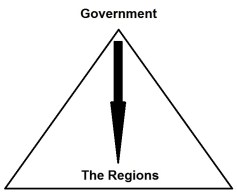
Mr. Bertrand proposes independence, yes, but his approach is what is refreshing and inspiring. As it stands now, both federally and provincially, power is a top-down affair with the regions being told from above what they can and cannot do.

gov-down

Usually, the carrot on a string method is used to motivate; either play ball or you don’t get the carrot. We in the West have been following the carrot for about 100 years now, perhaps it’s time we reviewed this?

There has been much speculation about how an independent West would be like. Albertans are solidly leading the charge, followed by Saskatchewan and Manitoba. British Columbia is lagging behind for many reasons, with Vancouver / Victoria being the main areas of resistance to independence. But why does a future independent West have to be based on a provincial model? How is the status quo working out?

For an independence to be successful, Mr. Bertrand states, it must be reborn. Hence his calling for the “République fédérale du Québec”. What?  A FEDERAL republic?

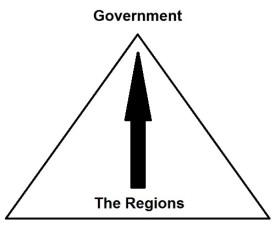
Consider if you will, a Federal Republic of Western Canada. Since we would all share the same hopes and dreams of our new country, gone would be the old monikers of how the provinces are named now. Instead, a new country would be delineated and named by region. For example, The Caribou, Peace River, Okanagan, Foothills, Fraser Valley, etc. Each region would be self-governing and would have representatives in a centrally located capital. There are precedents that can be used as examples such as Switzerland’s 26 Cantons (regions).

gov-up

In this way, since authority to govern flows from below, the government must follow the will of the people, all of the people.

I would submit that the idea has merit, particularly the concept that if we are to form a new country based on our values and hopes for the future, the old system must come down so we can start on a level playing field.

I’m charged up about this and will endeavor to translate and interpret Mr. Bertrand’s ideas for the future. Granted, not all of them will apply but the basic concepts are sound. Watch for more on this in future posts.

In the meantime, think about this, discuss it and let the concept occupy you, dear reader, until next time.

So, what do you want?

So, what do you want?

As I look over the various Facebook pages that provide an online home for independence-minded people I am struck by several things and I thought I’d share them with you, the reader. This is by no means an authoritative judgment, just personal observations, nothing more.

First, a bit about Facebook. The social media phenomenon is probably best exemplified by Facebook to the point where it can determine the outcome of events in real-time. We see it all the time, public gatherings, events, conferences and even in organizing riots. The power of Facebook should never be underestimated. Any politician that does so, does it at his own risk.

But it is, after all, social media. The same site that gives us videos of cuddly critters and makes us laugh, cry or angry tends to be a breeding ground for every false hope story and exaggerated claim that can be brought to bear against us.

With all the positive aspects of social media, it’s sometimes too easy to forget the negative aspects. I was once at a coffee shop and noticed a table of six millennials enjoying their drinks. All of them were hunched over their smart phones with fingers flying over the screens. Not a word was spoken, none made eye contact. I watched them for quite some time as did many other patrons. Not one even looked up or even acknowledged the presence of other people surrounding them. Crazy, eh?

As we head towards independence, heavy use of social media is a must. But as we organize and plan it becomes obvious that most social media users are oblivious to the real world. We see movements with thousands of so called members but when it comes time to meet, for real, organizers are lucky to see more than ten. Such is life in our new social media world. Politicians do not see “Likes” as people, to make an impression one has to step out of their comfort zone and be seen.

If you want to be in the forefront, be in the forefront.

Where does it go?

“Equalization Payments”…is there a pair of words that stick more in the craw of independence-minded British Columbians?

The only thing that infuriates more is the complexity of equalization payments and the formula used to determine them. Now, I’m not an expert by any means but I have read enough to know a bit about it, certainly enough to be angry with it, and even angrier that it can’t be stopped easily.

Pierre Elliot Trudeau, the man Westerners love to hate, entrenched the equalization system into the Canadian Constitution. It was meant (according to Liberals) to make the standard of living and services available to all Canadians equal whether in BC, Alberta, Ontario or Nova Scotia.  But in practice, like everything Trudeau did, it was designed to enrich the traditional voter base of Quebec. And like the National Energy Program it did so at the expense of the West.

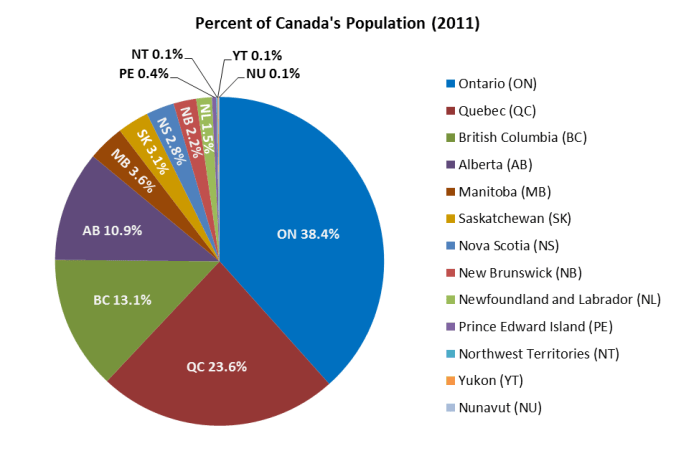
Being in the Constitution, it requires a constitutional amendment to change or stop, meaning the change needs to be approved by, 1) the federal Parliament, 2) the Senate, and 3) a minimum number of provincial legislatures. There must be at least seven provinces that approve the change, representing at least 50% of Canada’s population.

2011_canada_pop_pie

I wonder what are the chances of that happening? Let’s see, Ontario and Quebec have 62.1% of the Canadian population, Quebec (24) and Ontario (24) have more Senators than the whole West (24 combined)…well, you see what I mean…

So where do these equalization payments come from and how do they get redistributed to the various “have not” provinces? This is where it becomes akin to voodoo magic for the average British Columbian, so break out your dolls and pins.

According to the Mowat Centre, Federal transfers are determined by a formula based on federal legislation. This money is often referred to as Transfer Payments and help guarantee “reasonably comparable levels” of health care, education, and welfare in all the provinces. Note that the Territories are not included, they get separate funding.

The cash comes from provincial taxation per capita and goes into the Canadian Federal Government coffers. The money the provinces receive back in Transfers, Canada Social Transfer and Canada Health Transfer, can be spent anything the receiving government desires, accountability for the stated “reasonably comparable” purposes is loose, to say the least. This is probably why Quebec’s undergraduate tuition rates were just $2,519 this past year. That was: 38 percent of what an Ontario student paid ($6,640); 44 percent of the cost to a student in Alberta ($5,662); 45 percent of what a Saskatchewan student paid ($5,601); and 52 percent of what a B.C. student shelled out ($4,852). (Ref. Fraser Institute)

On physician ratios, in 2010, British Columbia and Alberta had 213 and 211 general physicians respectively per 100,000 people; the numbers for Ontario and Saskatchewan were 189 and 169. Meanwhile, the Quebec ratio was 224 general physicians per 100,000 people. (Ref. Fraser Institute)

There are in fact areas, particularly in Social Transfers, where BC does benefit. However the question we are always asking from our perspective as secessionists is: How would BC, the West, do without federal equalization transfers?

Those who enjoy the commuter’s “Colwood Crawl” in Victoria, might have an opinion on this. The insanely slow traffic has been a sore spot for people in Greater Victoria for years and years. And for just as long, experts in the levels of government have studied the issue and finally decided to create an overpass system to reduce traffic and anger over the lengthy project. The cost of this project is some 85 million dollars, funded by the federal ($32.6 million) and provincial ($52.4 million) governments. Remember that part of equalization is infrastructure funding based on need and merit and that the amount BC sends to Ottawa is more than it receives. Perhaps the project could’ve been done earlier if BC were part of an independent West free to fund its own projects? Food for thought.

I encourage readers to discuss these subjects and more with their fellow Westerners, a small flame must have a bit of wind to grow to a fire. Watch for more on this site in the future, feel free to comment and add your expertise to future entries.

Dr. John Sebastian Helmcken

Everyone in Victoria and, for that matter Vancouver Island, has heard of Helmcken Road in Victoria. As one travels along the Trans-Canada coming or going, one passes the highway sign announcing the turn off to Helmcken. But what, or rather who, was Helmcken?

John Sebastian Helmcken was a well-known physician who played a prominent role in bringing British Columbia into Confederation. Our own “father of Confederation”. And that’s it, as we are told. But why is he important to us as BC separatists?

Against his better judgment, Helmcken was bribed, pure and simple. In what was sure to be the first of many not-so-nice exploitations of the west, he helped bring BC into Confederation because of the promise of a railroad linking eastern Canada to the West, bringing prosperity to all, but most of all eastern Canada.

BC joining Confederation was a political decision; in fact, the people of BC were quite happy on their own. Backroom agreements between the Government of Canada, the railroads, and the hierarchy of the Colony of British Columbia were not put to the people of BC. Of this, Helmcken said,

“All we have to do is to agree to a series of Resolutions. It is not pretended that it is the voice of the people or the voice of this Council. It is well understood that it is a Government measure. And we all know what that means — it means that this series of Resolutions is to be passed — And we have it from the Governor that he desires to send these Resolutions to Canada; they will not go, they are not intended to go, as the opinion of the people.”

And so British Columbia surrendered its sovereignty. We now have minimal control of our future; our decisions are made for us from eastern Canada over 4 thousand kilometres away. We are taxed without adequate representation, 6 Senators to Quebec and Ontario’s 48, 42 seats in Parliament compared to Ontario’s 121 and Quebec’s 78. This means we are subservient to the desires of eastern Canada.

Dr. Helmcken warned British Columbians,

“I feel perfectly sure, Sir, that if Confederation should come, bringing with it the Tariff of Canada, not only will the farmers be ruined, but our independence will be taken away; it will deprive our local industries of the protection now afforded them; and will inflict other burdens upon them; it will not free trade and commerce from the shackles which now bind them, and will deprive the Government of the power of regulating and encouraging those interests upon which the prosperity of the Colony depends.”

He was correct. We see this to this day with inter-provincial trade boundaries and the multitude of overlapping regulations between federal and provincial governments.

Besides being a physician, Helmcken was a visionary who only reluctantly participated in bringing BC into the Canadian fold. He knew what the consequences were and advised British Columbians not to enter Confederation.

“It would be absurd for us to sacrifice our interests in order that laws may be made for us by a people who know little of our condition and wants, and who in fact must necessarily legislate for the greater number — the people of the Atlantic Provinces. It is dangerous to place ourselves at the disposal of superior numbers.”

“I believe, Sir, we are quite capable of making laws for ourselves.”

“If we are united, or rather absorbed, everything will centralize in Canada, and the whole country will be tributary to Canada. The number of Representatives sent to Ottawa from other places would overwhelm the number sent from British Columbia. Even in the matter of appropriations, where the scramble always is, this Colony would be overborne: we should be laughed at by the victors for our pretensions.”

“If we are Confederated with Canada we become its tributary, and in all that concerns us chiefly Canada has to act for us. In all our chief concerns, commerce, shipping, and mercantile laws, agriculture, trade, navigation, fisheries, currency, banking — Canada rules. She may tax us to any extent, and in any manner she pleases, so that it is quite possible we may have export duties on gold and coal.”

“All such things as require money for their performance are left for the Colony to provide; those that require intellect are supplied by Canada. … Cannot we pay our Colonial intellect to do our business well, instead of theirs to do it badly?”

“Confederation will ruin the farmer, and destroy at once the greatest inducement to immigration; will ruin the brewer and the fisheries; do no good to commerce; afford no larger market for lumber, coal, or anything else; in fact do a great deal of harm and no good, save that which is problematical and fanciful.”

And here we are, 145 years later. We have the benefits of the modern age; we would’ve had them anyway. But 145 years later the good Doctor’s warning still applies.

So next time you find yourself passing Helmcken Road in Victoria, know that the man had BC’s interests at heart but was forced to play by eastern Canada’s rules without question.

Much as it is today.

Whither Wexit?

Wexit. Is it going to be easy?

As an avid reader of online news, much better than the mainstream opinionarama variety, I am somewhat taken aback at how little concern there is in eastern Canada about the possibility of secession by the West. Could it be they know something we don’t?

The latest term being tossed around in our circles is “Wexit”, an adaptation of the British “Brexit” that signaled a departure from the European Union. Upon examination it looks easy enough, call a referendum, people vote, 51% takes the prize, the other 49% can lump it. Badda-Bing-Badda-Boom, easy peasy. Let’s start on Monday.

But is it? Sorry folks, in Canada it isn’t and here’s why. But first, a little history.

Let’s go back to October 30, 1995, the day Jean Chretien came close to losing Quebec by less than a point. It was the largest voter turnout in Quebec’s history and had it swung the other way the Quebec government was ready to unilaterally declare independence.

Jean Chretien, to say the least, was a bit unnerved at coming so close to being the Prime Minister that lost the country. He waited to make his move. It came in the 1998 Supreme Court decision that unilateral separation by a province was illegal, required a constitutional amendment, and that only a clear majority could bring about any negotiations on separation from Canada. Bingo!

The federal point man on these matters, appointed by Chretien, was Stephane Dion. Dion became the architect of the Clarity Act. Now while the act was primarily aimed at Quebec, it also has a tremendous bearing on the aspirations of the West since it could be applied to any province.

But what does the act say? Here is where we get into the nitty-gritty of things, and a bit later on, the implications for Western independence.

If ever there was an unfair piece of legislation born of desperation, the Clarity Act is it. Let’s examine the key points.

  • The House of Commons has the power to decide if a referendum question is clear enough.
  • The question must be solely concerned with separation. This means a clear question, in or out, yes or no.
  • Only the House of Commons can decide if the results are a “clear majority” or not. Exactly what a clear majority is, is not specified and could be anything. This magic number can be changed by the House at any time.
  • In the case of success, all provinces and First Nations must be involved in the negotiations.
  • The secession of the province(s) will require a Constitutional amendment approved by at least two-thirds of the provinces (7) that have at least 50% of the population of Canada as a whole.
  • The House of Commons can override the results of the referendum decision if, in its opinion, it violates any part of the Clarity Act.

A referendum cannot be held by a group of provinces, it has to be done by each province individually. Not an easy task.

So, Wexit? Not in the pure sense of the word. Canada has made sure it holds all the cards and unlike the United States which has declared itself “indivisible”, Canada is divisible but not easily so. In fact, it is almost impossible.  Almost.

With Canada eager to play lapdog to the United Nations and preach from above about our tolerance, understanding, diversity, and respect for the human condition, it would be an impossibly huge black eye to deny these things to its own citizens. Public international law would likely apply in this case, especially if it involved nearly half the land mass and 40% of the population of Canada. New countries have been born with much less.

By now, dear reader, you must doubt the task before us. I don’t blame you one bit but we need to keep a few things in mind. First, this is an incredibly long process! Secession has to become not only acceptable but viable to our populations before we can even begin to speak about referendums. Second, it will not be an easy process once underway. We can see just be the nature of the Clarity Act how underhanded the government can be. Negotiations will likely take 5 or more years during which, according to the act, the Canadian Constitution and laws apply.

There is much to discuss, much to consider and debate. This blog will try to play a part in future posts but supporters need to speak to others and make the case for a new country where we dictate our own destiny. Get busy, there is work to be done!